

Mining Without Borders: How Chile and Latin America Can Grow Together
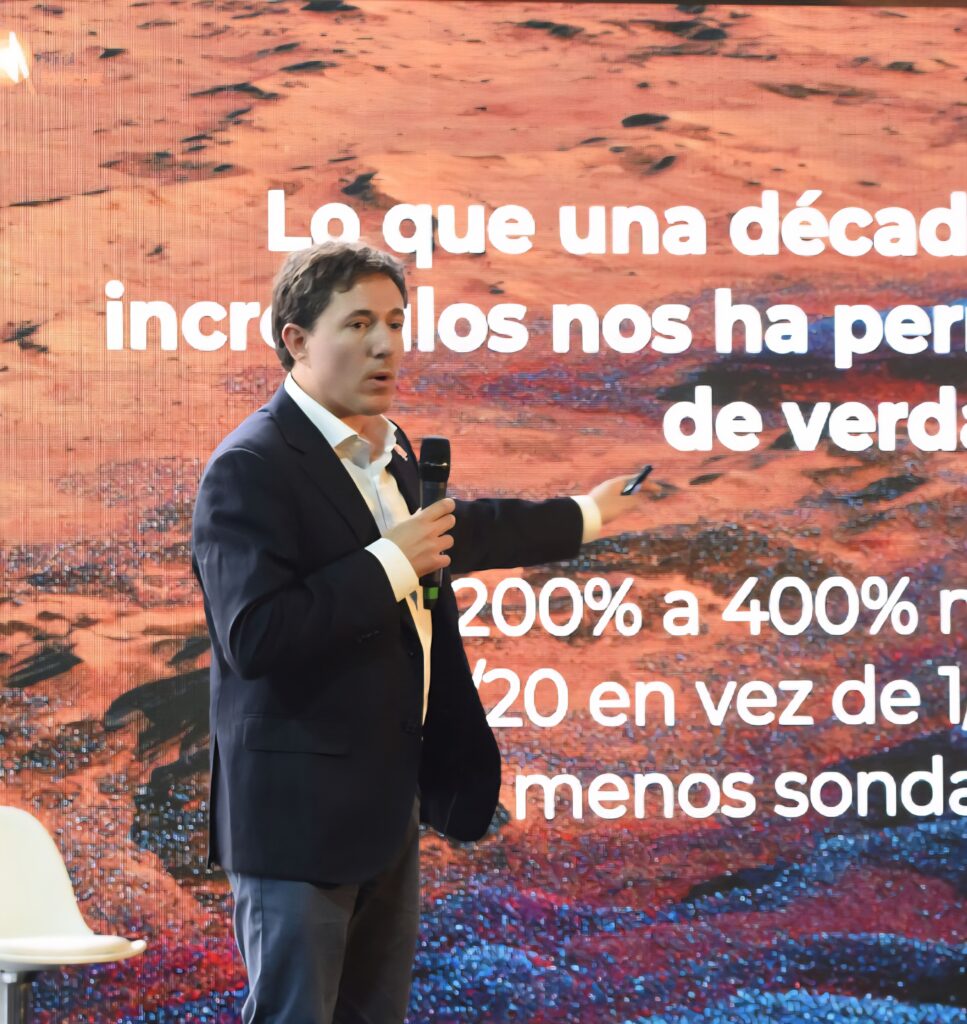


When mining does well, it’s not just the companies or producer countries that win; the entire value chain wins.
The year 2026 is shaping up to be a turning point for the global mining industry. Prices for strategic minerals are at historically high levels, there is an accelerated race to secure supply for the energy transition, and some of the world’s largest mining projects are advancing in parallel. This configuration creates a landscape of opportunities that will hardly be repeated with the same intensity in the short term.
In this context, mining—far from being left behind—is at the center of current events. And Chile, as a quintessential mining country, faces a strategic decision: limit itself to competing to export minerals, or assume a more ambitious role as an exporter of “mining” in the broad sense.
The distinction is not merely semantic. Exporting minerals implies competing with our neighbors and producers around the world on price, volume, and costs. Exporting mining, on the other hand, means offering knowledge, services, technology, human capital, and advanced solutions that accompany the development of mining projects, wherever they may be. In that scenario, we stop being competitors and become allies.
This idea is not new to the industry. As Joaquín Villarino, President of the Mining Council (Consejo Minero), stated: “The export not only of minerals, but also of mining, is a conversation long known in the industry, which means that services for this activity must also be exported.”
This installed capacity—built over decades of operation, learning, and technological sophistication—is one of the country’s most undervalued assets. Chile doesn’t just extract minerals: it designs and operates mines in extreme conditions, manages complex geoscientific data, develops digital solutions for exploration, optimizes processes, and trains highly specialized professionals. Furthermore, we successfully exploit copper ore grades that would be unprofitable to mine in the vast majority of other countries. All of that is also mining. And all of that is exportable.
The mining boom currently being experienced by countries like Argentina, driven by new discoveries and renewed investor interest, should not be seen as a threat. On the contrary, it represents a historic opportunity for Chile to consolidate itself as a strategic partner in regional mining development. The same applies to Bolivia and other Latin American countries seeking to accelerate their projects with increasingly demanding technical, environmental, and operational standards.
In this sense, it is worth extending a wish for success—sincere and strategic—to the new authorities in the mining sector, both nationally and in neighboring countries. When mining does well, it’s not just the companies or producer countries that win; the entire value chain wins, including those who provide knowledge, technology, and specialized services.
Viewing mining from this perspective also requires a broader invitation: to understand that the sector’s development depends not only on tons produced or international prices, but on the capacity to add value, reduce uncertainty, and make better decisions. In a world where projects are increasingly complex, advanced mining based on data, analytics, and technology becomes a key competitive differentiator.
If Chile manages to position itself as the region’s main provider of advanced mining solutions, the benefit will be twofold. On one hand, we diversify our export matrix without renouncing our mining identity. And on the other, we strengthen a regional collaboration network where the growth of one country drives the development of all. The latter is imperative today, when alliances present themselves as the alternative to fair negotiation with great world powers.
In 2026, everything is happening. The question is not whether mining will remain relevant—that is already clear—but what role we want to play as a country. Competing for minerals is necessary. Exporting mining, however, is a strategic decision. And that is where Chile has the opportunity to become not only a leading producer but an indispensable ally for the continent’s mining industry.
Column originally published in Revista Minería Chilena (spanish version).